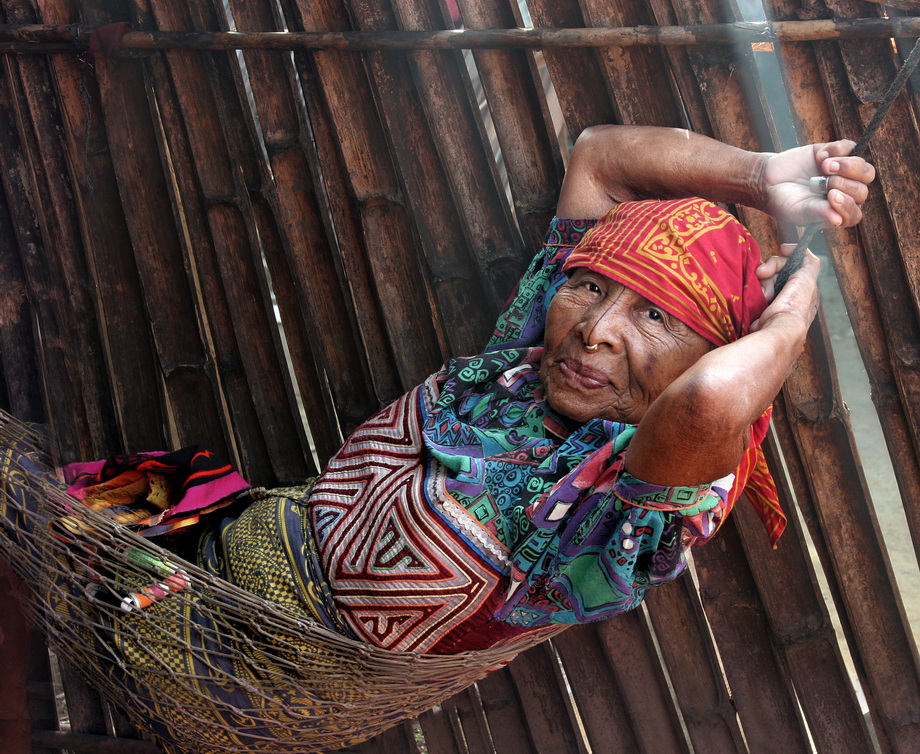
The Guna (formerly known as the Kuna) are an indigenous people primarily inhabiting the Guna Yala archipelago (San Blas), on Panama's Caribbean coast. They are famous for their strong political autonomy and vibrant culture.
The most famous element of their culture is the mola, a traditional textile art form. These are brightly colored fabrics made using a reverse-appliqué technique, which Guna women wear on their clothing, featuring designs ranging from geometric patterns to local flora and fauna.
The Guna led the Dule Revolution in 1925 to protect their customs from government oppression. As a result, they now enjoy a high degree of self-government in their comarca (territory), managed by the Guna General Congress.
Coral Islands: They live on small white-sand islands with palm trees, although they farm the land on the mainland.
Economy: Traditionally based on fishing and coconut farming (which for a long time served as their "currency"). Today, sustainable tourism is a crucial source of income.
Matrilocality: Their society is matrilocal; when a couple marries, the man typically moves into the home of the woman's family.
 Extended info about Guna people